
Easements and Access Surveys
Establishing where access runs — and documenting the evidence that defends it when it's challenged.
EVERY SURVEY BUILT FOR
LEGAL DEFENSIBILITY
EVIDENCE, LAW & REASONING
FULLY DOCUMENTED
HIGHLAND
LICENSED PLS, PE, UTAH
START WITH
A CONSULTATION
When access to a property is not clearly defined, small questions become expensive ones — a driveway that crosses a neighbor's land, a utility corridor that limits where a structure can sit, a parcel that may be landlocked. An Easement and Access Survey is a legally recognized record relied on by attorneys, title companies, courts, and real estate professionals to establish where access exists, over which parcels, and on what legal footing.
Highland's surveys resolve questions such as:
- Is there a documented easement on record?
- Where is access currently occurring, and over which parcels?
- Is this an easement by necessity? If so, which parcel bears servitude, and which holds dominant access rights?
- What legal documentation supports or challenges existing claims?
Every parcel must have legal access — the question is never whether access exists, but where it runs and how it is defined. And every one of those answers rests on the boundary beneath it: an easement cannot be located, and a prescriptive or implied right cannot be measured, without first establishing where the line is. Highland retraces that boundary, then establishes the recorded and implied easements against it — under land-use and boundary law, and documented so the finding holds when it is questioned.
What Is an Easement and Access Survey?
An Easement and Access Survey is a specialized record of survey that includes detailed data about:
- Existing recorded easements (e.g., utility corridors, driveways)
- Prescriptive or implied access points
- Potential areas of legal contention or servitude
These rights may be invisible on the ground, but they significantly affect how a property can be used, developed, or sold. For example, a buried utility line may grant the city access for maintenance, or a driveway might cross a neighbor's land under an unrecorded prescriptive right.
Why You Need One
Easement surveys are relied on by:
- Attorneys and legal teams
- Title companies and underwriters
- Courts of law (litigation, defense, or prosecution)
- Buyers, sellers, and investors
These surveys are essential for:
- Property entitlements and permits
- Ensuring continual and legal access
- Increasing clarity and property value
Without one, you risk unknowingly violating property rights, facing legal action, or stalling real estate transactions. With one, you protect your interests, gain leverage in disputes, and ensure future development or sale can proceed smoothly.
Legal Questions Highland's Surveys Help Answer
Is an easement officially recorded?
Highland uncovers all documented easements through title research and public records.
Is there access via unwritten or prescriptive rights?
Highland's field observations help flag potential long-standing use that may carry legal weight.
Is there an easement by necessity?
If a parcel appears landlocked, Highland helps identify the servient estate and confirm legal access points — because every property has a right to access, even if it's not yet defined.
What legal documentation supports the access?
Highland consolidates deeds, surveys, and title references to create a complete access picture.
What's Included in the Survey Process
Here's how Highland conducts each Easement and Access Survey:
Initial Consultation
Highland begins by gathering information about your property, its legal description, and your specific access concerns or goals. Whether you're preparing for development or resolving a dispute, the approach is tailored accordingly.
Research and Record Review
Highland examines county plats, deeds, title reports, and prior surveys to uncover any recorded easements, access rights, or restrictions affecting your property.
Field Survey and Data Collection
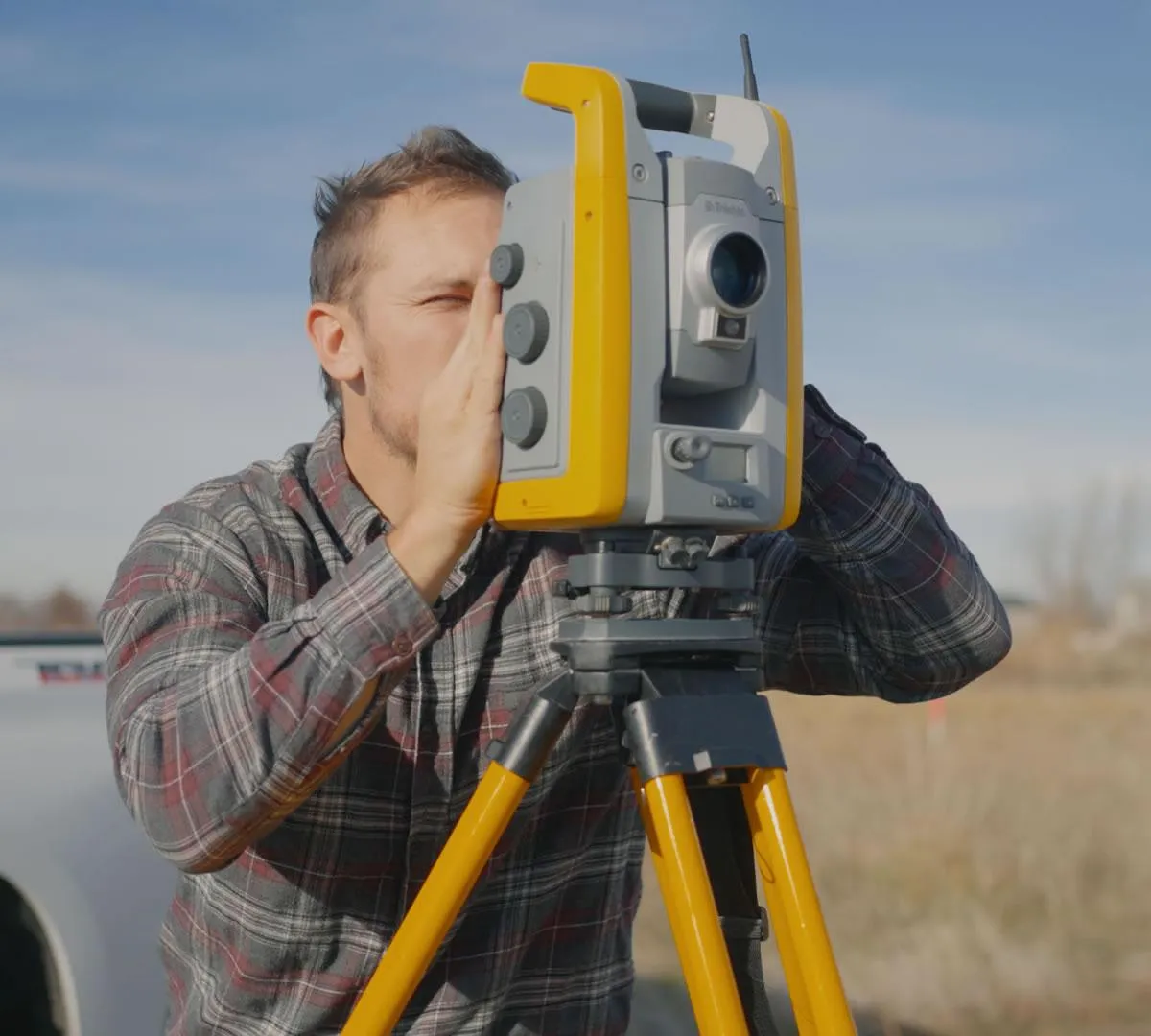
Using GPS and total station equipment, Highland physically surveys the property to verify boundaries and locate visible or underground easement features, such as utility markers, fences, or driveways.
Analysis and Mapping
Highland analyzes all collected data and overlays it with recorded documentation to produce a legally documented survey. This map clearly outlines easement locations, dimensions, and any access rights associated with your land.
Deliverables and Support
You'll receive a sealed, legally defensible survey document. It can be submitted to attorneys, title companies, planning departments, or used in court as evidence to support or dispute claims of access, prescriptive rights, or easement by necessity. Highland is also available to explain the findings and provide expert guidance for next steps.
Common Issues That Require an Easement and Access Survey
Blocked or Uncertain Access to Property: Some properties, especially in rural or developing areas, may not have direct access to a public road. Without a legally defined access easement, you could find yourself landlocked or dependent on a neighbor's goodwill.
Undisclosed Utility Easements: Underground or overhead utilities often run across private property. If you're unaware of a utility easement, you might unknowingly build a structure that violates its restrictions, leading to fines, forced removal, or future service disruptions.
Property Line Disputes: Disagreements between neighbors often arise when shared driveways, fences, or access roads cross property lines. An easement survey provides legal clarity and can prevent or resolve conflicts before they escalate.
Development or Construction Delays: Before building or subdividing, local authorities often require clear documentation of all existing easements. Without it, your permit could be denied or delayed, costing you time and money.
Title and Real Estate Complications: Unresolved easement issues can derail real estate transactions, leading to failed closings or legal liabilities down the road.
How Highland Resolves Them
Highland establishes where easements exist and, just as important, where they do not — each conclusion tied to the record and the evidence that supports it. That documented clarity lets the client:
- Defend a position: the survey is documented to hold up in negotiation or in court.
- Proceed on established rights: the legal right to enter and use the property is established, not assumed.
- Protect future development: where access and easements run — and where building is constrained — is known before design begins.
- Support real estate transactions: a sealed, documented survey gives buyers, title companies, and lenders a clear record of the property's access.
Because an Access Right Is Only as Strong as the Boundary It Rests On
The Boundary Comes First
An easement is a right measured against a line. Before Highland reports where access runs or whether a prescriptive right exists, it retraces the boundary everything else depends on. An easement located against an assumed line is a finding waiting to be challenged; one located against a retraced boundary holds.
Recorded and Unwritten Rights, Both Investigated
Some access is recorded; some has been earned through decades of use and never written down. Highland investigates both — title and public record for what is documented, field evidence for what long-standing use may support — and documents which is which, so the client knows what is established and what is a claim a court would have to weigh.
Built to Be Used as Evidence
An easement finding earns its value in a dispute, a closing, or a permit review. Highland documents the evidence located, the records examined, and the reasoning behind each conclusion, so the survey can be handed to an attorney, submitted to a court, or relied on by a title company without a gap in it.
Highland Names What It Can Defend
The first response to any access claim is that it doesn't exist, or doesn't reach that far. Highland states its findings plainly — where an easement runs, where it does not, what the evidence supports and what it does not — because each is documented well enough to stand behind.
Easement and Access Survey FAQs
Here are answers to some of the most common questions about Easement and Access Surveys:
What is an easement, and why does it matter?
What should I do to prepare for the survey?
Will you find unrecorded or hidden easements?
Can this survey help me resolve a property dispute?
Do I need this survey to sell or develop my property?
Is the survey legally valid?
Ready to Get Started? Let's Talk.
Whether you're preparing for a project, resolving a boundary concern, or need legally defensible documentation to protect your property rights, Highland is here to help. Contact Highland today or schedule a consultation to get started.
Contact Us
For more information, please contact us with any questions.
Real Clients. Real Results.
What Property Owners Say About Highland.
Homeowners, developers, and landowners across Utah trust Highland for accurate, defensible surveying.
Tyler knew exactly what I needed to start my process with a city council. He drew up 3 options I could use without getting expensive survey or engineering work done. He nailed it for what I needed and I will 100% use him for everything when the project moves forward.
Larry P.
Tyler completed our survey for a development project in Harrisville and did a fantastic job, exactly what we needed with great detail. The quality of their work was outstanding, and they maintained clear and consistent communication throughout the entire process.
Jim B.
Fees were reasonable and the end result was better than any company I have worked with in the Utah region. They were able to meet all of our specified criteria for airport work — incredibly precise survey was required and completed perfectly.
Connor B.
We are building a shop and needed a survey to present to planning and zoning. Highland sent me a layout map within a very short time. They were understanding of our limited knowledge and very responsive. We would gladly utilize their skills in the future.
Matt W.
Stop Guessing.
Establish Certainty.
Get a licensed land surveyor who delivers accurate, defensible results — documented for the public record.
Request a Consultation · Licensed PLS · Court-Defensible Documentation · Wasatch Front & Rural Utah