
Quiet Title Actions & Land Surveys
Establishing the boundary a court can rely on to quiet competing claims to your land.
EVERY SURVEY BUILT FOR
LEGAL DEFENSIBILITY
EVIDENCE, LAW & REASONING
FULLY DOCUMENTED
HIGHLAND
LICENSED PLS, PE, UTAH
START WITH
A CONSULTATION
When property boundaries or ownership rights are unclear, a land survey can be a critical part of resolving the issue — especially when a Quiet Title Action is required. A Quiet Title Action is a legal proceeding used to "quiet" competing claims and clarify lawful ownership of land. In many cases, a professional land survey is essential to provide the court with reliable data about property boundaries, encroachments, and historical use.
A quiet title action turns on evidence, and a boundary survey is often the central piece of it. But not every survey carries the same weight in court. When ownership is contested, the survey the court reasons from is the one whose boundary opinion is documented — the evidence gathered, the records traced, the boundary law applied, and the reasoning shown. Highland builds the survey to be that document: a retraced boundary strong enough to become the foundation of the court's determination, rather than one more competing opinion to be argued over.
What Is a Quiet Title Action?
A Quiet Title Action is a legal process used to resolve disputes or uncertainty over property ownership. It may be necessary when:
- There are conflicting boundary claims between neighbors
- Historical records or property transfers are unclear or incomplete
- Rights-of-way or easements have been abandoned or improperly recorded
- Adverse possession or boundary by acquiescence is claimed
The court uses evidence — including land surveys — to determine the lawful owner of the property in question. While the survey doesn't grant ownership, it is often critical for presenting physical evidence about the land's boundaries, use history, and legal context.
How a Survey Supports a Quiet Title Action
Highland's licensed PLS provides legal-grade boundary surveys to support Quiet Title Actions. These surveys are prepared using professional standards, including detailed research and field measurements. Here's how Highland approaches each case:
Initial Consultation & Records Review
Highland begins by reviewing titles, any previous surveys, and publicly recorded documents, and identifies relevant easements, rights-of-way, and historical land uses.
Boundary & Title Research
Highland performs in-depth title research, often tracing back to the original land patent. This step identifies any discrepancies in legal descriptions or undocumented claims that may impact the Quiet Title Action.
Field Survey & Data Collection
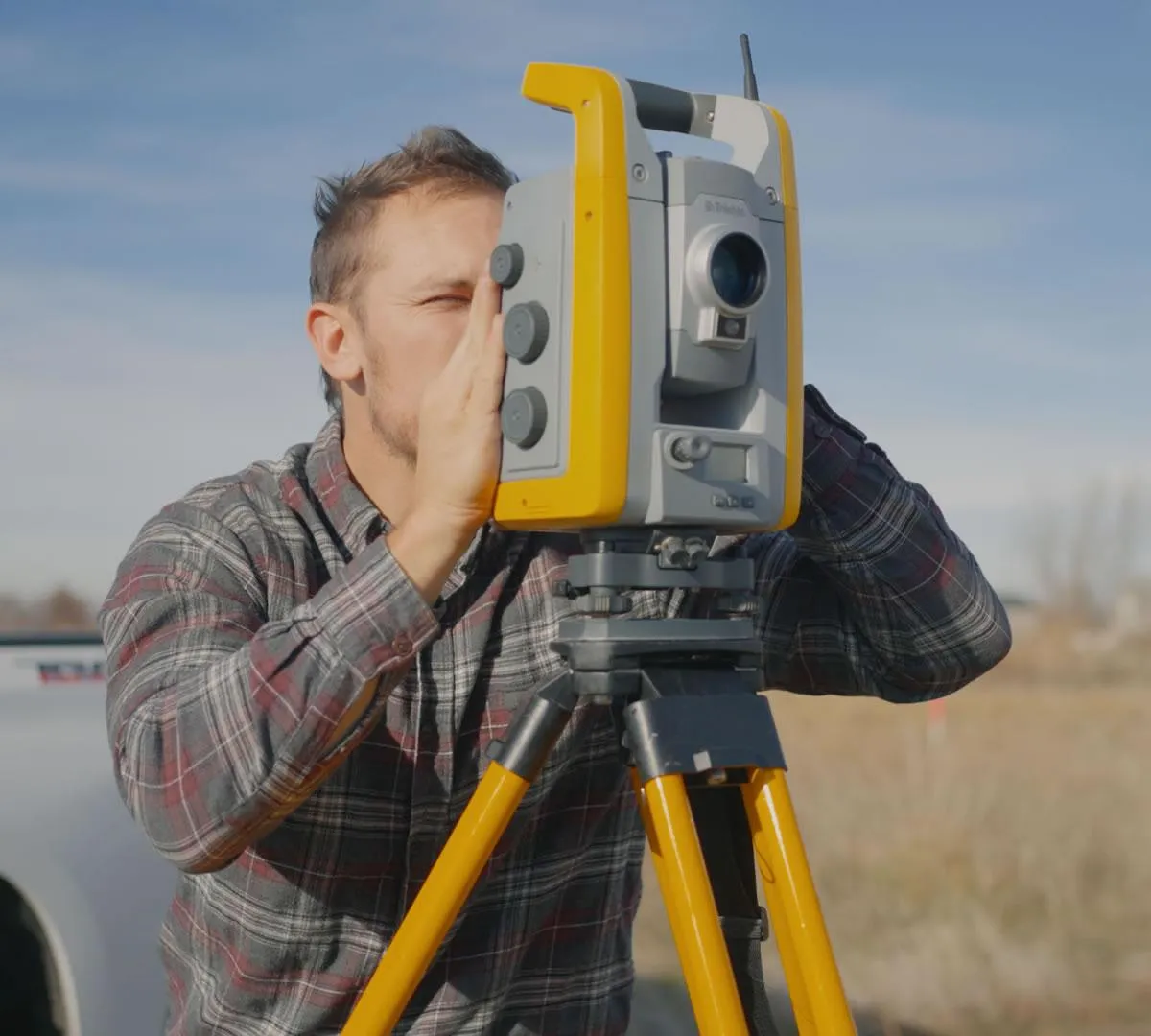
Using field equipment, Highland conducts a thorough site survey — identifying existing markers, fences, encroachments, and any other physical features or indicators deemed relevant by the surveyor.
Analysis & Documentation
Highland reconciles field data with public records to produce a survey plat. This legal document outlines the findings and boundary conclusions, essential for supporting or avoiding court proceedings.
Post-Survey Legal Support
Highland provides signed, court-ready documents and, when required, expert testimony, and works closely with attorneys and title companies to ensure all parties clearly understand the survey's findings.
Why You Might Need a Survey for a Quiet Title Action
Unclear land ownership can create serious complications — both legal and financial. A professionally conducted land survey can be an essential step in resolving property disputes through a Quiet Title Action. Here are the most common problems that make this service essential, along with how Highland helps resolve them:
Common Issues
Common Problems That Require Quiet Title Action
Disputed Property Lines: Neighbors may disagree about where the actual boundary lies, especially if fences, driveways, or outbuildings are built near or across assumed lines. Without a documented survey, these conflicts can escalate quickly.
Overlapping Claims: Multiple parties may claim rights to the same parcel due to administrative errors, unclear transfers, or overlapping deed descriptions.
Encroachments and Unauthorized Use: A neighbor or previous owner may have used part of the land for years without a formal agreement, potentially leading to adverse possession claims if not addressed.
Title Insurance Requirements: Title companies often require a Quiet Title Action before issuing insurance, especially if there's a clouded title or boundary concerns, which can delay real estate transactions.
Our Solutions
How Our Service Solves These Problems
- Defines the extent of legal ownership: the survey creates a legally defensible record of the property's boundaries and conditions — the record a quiet title judgment is built on.
- Reduces the ground for future disputes: a documented boundary, filed in the public record, gives future owners and neighbors a reasoned record to rely on rather than a line to re-argue.
- Supports legal and real estate processes: courts and title companies can rely on a documented survey, which is what moves a quiet title action, a refinance, or a sale forward without the survey itself becoming the thing in question.
- Resolves the issue before it compounds: establishing the boundary early is a fraction of the cost of litigating it late. Deferred title risk compounds the way every other deferred risk does.
Because in a Quiet Title Action, the Survey Is Evidence — and Highland Builds It Like It
The Survey the Court Reasons From
In a contested title, the court weighs the evidence and reaches a determination — and the boundary survey is often the center of that evidence. Highland builds its survey to be the one the court can reason from: the records traced, the boundary law applied, the reasoning documented on the face of the record. A survey that only shows lines gives the court nothing to rely on. A documented one gives it a foundation.
Traced to the Original Grant
Quiet title questions are usually old questions — an unclear transfer, an abandoned easement, a claim of long use. Highland's research often traces the chain of title back to the original land patent, because the answer to a competing claim is frequently in the senior conveyance, not the recent one. What the record established is what the court restores.
Court-Ready, and Ready to Be Defended
Highland delivers sealed, court-ready survey documents, and when a case requires it, expert testimony explaining how the boundary opinion was reached. A survey is court-ready not because it is stamped, but because the reasoning behind it can withstand cross-examination. Highland documents to that standard.
The Evidence Named, the Claim Weighed Honestly
Highland reports what the evidence supports and what it does not. Where a claim of adverse possession or boundary by acquiescence appears, Highland documents the evidence and discloses what the law may recognize — and leaves the adjudication to the court. The client learns what is established and what is still a question, before spending on litigation to find out.
Quiet Title Action FAQs
If you're navigating a potential title issue or preparing for legal clarification of your property boundaries, you likely have questions. Below are some of the most common concerns property owners and attorneys in Utah have.
What is a Quiet Title Action, and how does a land survey help?
Is a survey required for a Quiet Title Action in court?
What documents do I need to get started?
Does the survey determine ownership?
Do you work with attorneys or title companies?
What happens after the survey is complete?
Contact Us for Boundary and Title Clarification
Whether you're addressing a boundary dispute, preparing for a Quiet Title Action, or seeking clarity on the extent of your property, our licensed surveyors are ready to help. Contact us to discuss your situation, or schedule a consultation to get started.
Contact Us
For more information, please contact us with any questions.
Real Clients. Real Results.
What Property Owners Say About Highland.
Homeowners, developers, and landowners across Utah trust Highland for accurate, defensible surveying.
I am an attorney. Tyler helped do survey work for one of my clients in a dispute with a city over the value of property being taken by eminent domain. There were competing surveys that resulted in substantially different values because the size of the property was in dispute. In the end, Tyler's survey proved to be the most accurate. He convincingly presented his case. I will definitely use Tyler again whenever I need a top-quality surveyor.
Jared S.
Attorney
Tyler earned my full endorsement. He could have easily just given me the correct survey, filed it with the County, and let me deal with the issues discovered — but that could mean a lengthy legal process and/or dispute with my neighbors. Instead, Tyler contacted the prior surveyors, presented his evidence, arranged a meeting among the professional surveyors, and got everyone to agree that the new survey was correct. The prior surveyor set up and verified Tyler's work — to the fraction of an inch.
Darin C.
I needed a survey for a boundary dispute, and Tyler went above and beyond my expectations. His attention to detail and communication are impressive. He and his team at Highland Surveying performed everything he said he would do in a timely manner.
T.M.
Stop Guessing.
Establish Certainty.
Get a licensed land surveyor who delivers accurate, defensible results — documented for the public record.
Request a Consultation · Licensed PLS · Court-Defensible Documentation · Wasatch Front & Rural Utah